Search...

Δευτέρα 31 Ιανουαρίου 2022

[EN] FORTRESS EUROPE: THE MILLIONS SPENT ON MILITARY-GRADE TECH TO DETER REFUGEES


by Kaamil Ahmed and Lorenzo Tondo
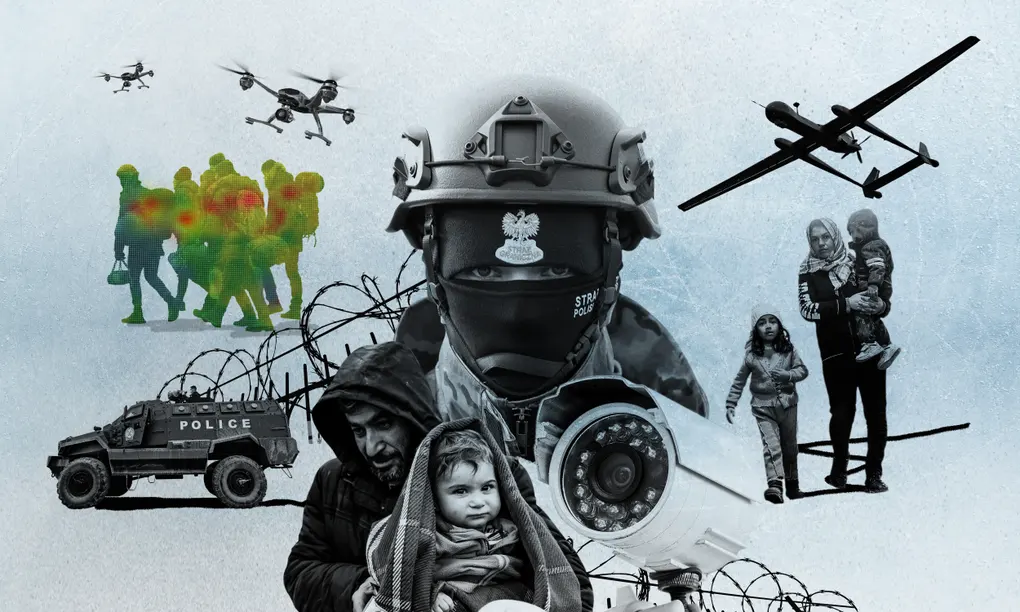


We map out the rising number of high-tech surveillance and deterrent systems facing asylum seekers along EU borders


from military-grade drones to sensor systems and experimental technology, the EU and its members have spent hundreds of millions of euros over the past decade on technologies to track down and keep at bay the refugees on its borders.

Poland’s border with Belarus is becoming the latest frontline for this technology, with the country approving last month a €350m (£300m) wall with advanced cameras and motion sensors.

The Guardian has mapped out the result of the EU’s investment: a digital wall on the harsh sea, forest and mountain frontiers, and a technological playground for military and tech companies repurposing products for new markets.


The EU is central to the push towards using technology on its borders, whether it has been bought by the EU’s border force, Frontex, or financed for member states through EU sources, such as its internal security fund or Horizon 2020, a project to drive innovation.

In 2018, the EU predicted that the European security market would grow to €128bn (£108bn) by 2020. Beneficiaries are arms and tech companies who heavily courted the EU, raising the concerns of campaigners and MEPs

“In effect, none of this stops people from crossing; having drones or helicopters doesn’t stop people from crossing, you just see people taking more risky ways,” says Jack Sapoch, formerly with Border Violence Monitoring Network. “This is a history that’s so long, as security increases on one section of the border, movement continues in another section.”

Petra Molnar, who runs the migration and technology monitor at Refugee Law Lab, says the EU’s reliance on these companies to develop “hare-brained ideas” into tech for use on its borders is inappropriate.

“They rely on the private sector to create these toys for them. But there’s very little regulation,” she says. “Some sort of tech bro is having a field day with this.”

“For me, what’s really sad is that it’s almost a done deal that all this money is being spent on camps, enclosures, surveillance, drones.”

Air Surveillance

Refugees and migrants trying to enter the EU by land or sea are watched from the air. Border officers use drones and helicopters in the Balkans, while Greece has airships on its border with Turkey. The most expensive tool is the long-endurance Heron drone operating over the Mediterranean.

Frontex awarded a €100m (£91m) contract last year for the Heron and Hermes drones made by two Israeli arms companies, both of which had been used by the Israeli military in the Gaza Strip. Capable of flying for more than 30 hours and at heights of 10,000 metres (30,000 feet), the drones beam almost real-time feeds back to Frontex’s HQ in Warsaw.

Missions mostly start from Malta, focusing on the Libyan search and rescue zone – where the Libyan coastguard will perform “pull backs” when informed by EU forces of boats trying to cross the Mediterranean.


German MEP Özlem Demirel is campaigning against the EU’s use of drones and links to arms companies, which she says has turned migration into a security issue.

“The arms industries are saying: ‘This is a security problem, so buy my weapons, buy my drones, buy my surveillance system,’” says Demirel.

“The EU is always talking about values like human rights, [speaking out] against violations but … week-by-week we see more people dying and we have to question if the EU is breaking its values,” she says.

Sensors and cameras

EU air assets are accompanied on the ground by sensors and specialised cameras that border authorities throughout Europe use to spot movement and find people in hiding. They include mobile radars and thermal cameras mounted on vehicles, as well as heartbeat detectors and CO2 monitors used to detect signs of people concealed inside vehicles.

Greece deploys thermal cameras and sensors along its land border with Turkey, monitoring the feeds from operations centres, such as in Nea Vyssa, near the meeting of the Greek, Turkish and Bulgarian borders. Along the same stretch, in June, Greece deployed a vehicle-mounted sound cannon that blasts “deafening” bursts of up to 162 decibels to force people to turn back.

Poland is hoping to emulate Greece in response to the crisis on its border with Belarus. In October, its parliament approved a €350m wall that will stretch along half the border and reach up to 5.5 metres (18 feet), equipped with motion detectors and thermal cameras.

A control room with 11 monitors and 30 cameras for surveillance along the Evros River in Nea Vyssa, Greece. Photograph: Byron Smith/Getty Images


Surveillance centres

In September, Greece opened a refugee camp on the island of Samos that has been described as prison-like. The €38m (£32m) facility for 3,000 asylum seekers has military-grade fencing and CCTV to track people’s movements. Access is controlled by fingerprint, turnstiles and X-rays. A private security company and 50 uniformed officers monitor the camp. It is the first of five that Greece has planned; two more opened in November.


At the same time, Greece opened a new surveillance centre on Samos, capable of viewing video feeds from the country’s 35 refugee camps from a wall of monitors. Greece says the “smart” software helps to alert camps of emergencies.

Artificial intelligence

The EU spent €4.5m (£3.8m) on a three-year trial of artificial intelligence-powered lie detectors in Greece, Hungary and Latvia. A machine scans refugees and migrants’ facial expressions as they answer questions it poses, deciding whether they have lied and passing the information on to a border officer.

The last trial finished in late 2019 and was hailed as a success by the EU but academics have called it pseudoscience, arguing that the “micro-expressions” the software analyses cannot be reliably used to judge whether someone is lying. The software is the subject of a court case taken by MEP Patrick Breyer to the European court of justice in Luxembourg, arguing that there should be more public scrutiny of such technology. A decision is expected on 15 December.


6/12/2021

https://www.theguardian.com/global-development/2021/dec/06/fortress-europe-the-millions-spent-on-military-grade-tech-to-deter-refugees

ΠΡΟΣΦΥΓΙΚΟ – «Η ΕΛΛΑΔΑ ΠΑΡΑΒΙΑΖΕΙ ΤΗΝ ΧΑΡΤΑ ΘΕΜΕΛΙΩΔΩΝ ΔΙΚΑΙΩΜΑΤΩΝ» – ΑΠΟΦΑΣΗ-ΚΟΛΑΦΟΣ ΑΠΟ ΓΕΡΜΑΝΙΚΟ ΔΙΚΑΣΤΗΡΙΟ


Η απόφαση του δικαστηρίου αναφέρει μάλιστα και πως οι πρόσφυγες που επιστρέφουν στην Ελλάδα κινδυνεύουν να αντιμετωπίσουν απάνθρωπη και εξευτελιστική μεταχείριση.

Για παραβίαση της Χάρτα Θεμελιωδών Δικαιωμάτων της ΕΕ από την Ελλάδα κάνει λόγο δημοσίευμα της Spiegel, καταδικάζοντας τον τρόπο μεταχείρισης των προσφύγων στη χώρα.

Το δημοσίευμα έρχεται έπειτα από απόφαση του Διοικητικού Εφετείου της Βρέμης, σύμφωνα με την οποία η Ελλάδα δεν ανήκει στις χώρες όπου διασφαλίζονται τα θεμελιώδη ανθρώπινα δικαιώματα των προσφύγων.

Ως εκ τούτου, ένας πρόσφυγας μπορεί, υπό ορισμένες συνθήκες, να υποβάλει δεύτερη αίτηση ασύλου στη Γερμανία, ακόμη κι αν η Ελλάδα του είχε υποσχεθεί προηγουμένως προστασία.

Η απόφαση του δικαστηρίου αναφέρει μάλιστα και πως οι πρόσφυγες που επιστρέφουν στην Ελλάδα κινδυνεύουν να αντιμετωπίσουν απάνθρωπη και εξευτελιστική μεταχείριση.

Ως παράδειγμα τίθεται η περίπτωση ενός Σύρου πρόσφυγα στον οποίο οι ελληνικές αρχές χορήγησαν άσυλο το 2018. Το 2019 όμως μετέβη στη Γερμανία όπου κατέθεσε νέα αίτηση ασύλου, η οποία ωστόσο απορρίφθηκε από την Ομοσπονδιακή Υπηρεσία Μετανάστευσης και Προσφύγων με την αιτιολογία ότι σύμφωνα με τους ευρωπαϊκούς κανόνες μόνο μια χώρα μπορεί να χορηγήσει άσυλο. Πρωτοδίκως το διοικητικό δικαστήριο Βρέμης επικύρωσε την αιτιολογία της γερμανικής μεταναστευτικής αρχής.

Το διοικητικό εφετείο ωστόσο είχε διαφορετική άποψη, σημειώνοντας ότι επιστρέφοντας στην Ελλάδα ο Σύρος δεν θα είχε για μεγάλο χρονικό διάστημα στέγη, δεν θα μπορούσε να εργάζεται για τα προς το ζην και δεν θα είχε πρόσβαση στο κράτος πρόνοιας. Για το λόγο αυτό η αρμόδια αρχή μετανάστευσης οφείλει να εξετάσει την αίτηση ασύλου, καταλήγει η απόφαση του Διοικητικού Εφετείου. Η Ομοσπονδιακή Υπηρεσία Μετανάστευσης και Προσφύγων δεν έχει δικαίωμα έφεσης. Μπορεί ωστόσο προσφύγει στο Ομοσπονδιακό Διοικητικό Δικαστήριο.

Πληθαίνουν οι καταγγελίες για pushbacks

Οι Αρχές ωστόσο φαίνεται να κάνουν τα τη ζωή δύσκολη όχι μόνο σε όσους βρίσκονται ήδη στην Ελλάδα, αλλά και εκείνων που επιχειρούν να πατήσουν στο έδαφός της.

Οι καταγγελίες για παράνομες επαναπροωθήσεις προσφύγων από τις ελληνικές Αρχές βλέπουν συνεχώς το φως της δημοσιότητας.

Η κυβέρνηση αρνείται συνεχώς τις καταγγελίες απαντώντας πως αποτελούν τουρκική προπαγάνδα.

Μάρτυρας σε ένα από τα πιο πρόσφατα περιστατικά βρέθηκε ένας διερμηνέας της Frontex που βρισκόταν σε αποστολή στον Εβρο. Ο ίδιος κατήγγειλε πως οι ελληνικές Αρχές τον έστειλαν στην Τουρκία αφού πρώτα τον χτύπησαν άγρια και του πήραν χρήματα, έγγραφα και κινητό.

Σύμφωνα με επίσημη καταγγελία του ίδιου που αποκάλυψαν χθες οι «Νew York Times», ο διερμηνέας προσπάθησε να εξηγήσει στους αστυνομικούς ποιος είναι και πού εργάζεται, αλλά αυτοί έβαλαν τα γέλια και συνέχισαν να τον χτυπούν.

Ο διερμηνέας, μέλος ομάδας εμπειρογνωμόνων που εργάζονται σε αποστολές της Ευρωπαϊκής Συνοροφυλακής και Ακτοφυλακής, κατάφερε να φτάσει στην Κωνσταντινούπολη, να καταφύγει στο ιταλικό προξενείο και να επιστρέψει στην Ιταλία, αποφασισμένος να ζητήσει την τιμωρία των ενόχων.

Φρικιαστικές μαρτυρίες

Τον Οκτώβριο, το Δίκτυο Παρακολούθησης της Βίας στα Σύνορα (BVMN) συγκέντρωσε 36 μαρτυρίες επαναπροωθήσεων που σχετίζονταν με 986 άτομα εν κινήσει στα Βαλκάνια.

Αυτή η έκθεση φιλοξενεί μαρτυρίες από πρώτο χέρι από μια σειρά χωρών της περιοχής με σκοπό να έρθει στο φως ο τρόπος με τον οποίο τα κράτη της Ευρωπαϊκής Ένωσης επιτηδεύονται σε συστημική βία εναντίον ανθρώπων που περνούν τα σύνορα.

Σχετικά με περιστατικά που έλαβαν χώρα στην Ελλάδα, η έκθεση αναφέρεται σε υποθέσεις νεκρών και αγνοουμένων στον Έβρο, στην προσπάθειά τους να περάσουν στην Ελλάδα από την Τουρκία.

Η μια ήταν η υπόθεση ενός φορτηγού- πλοίου κοντά στην Κω, που μετέφερε 400 πρόσφυγες και η δεύτερη πρόκειται για μια επαναπροώθηση, που σύμφωνα με το BVMN, καταγράφηκε ανοιχτά της Ικαρίας.

«Και οι δύο περιπτώσεις ενισχύουν το κλίμα συνεχούς βίας κατά των ανθρώπων που πλέουν στο Αιγαίο» αναφέρει η έκθεση.

Πάνω από 50.000 απελάσεις σε ένα χρόνο

Σύμφωνα με το τουρκικό υπουργείο Εσωτερικών, η Ελλάδα απέλασε παράνομα 58.283 μετανάστες στην Τουρκία τους 12 μήνες πριν από την 1η Νοεμβρίου 2018, κάτι που η Ελλάδα αρνείται.

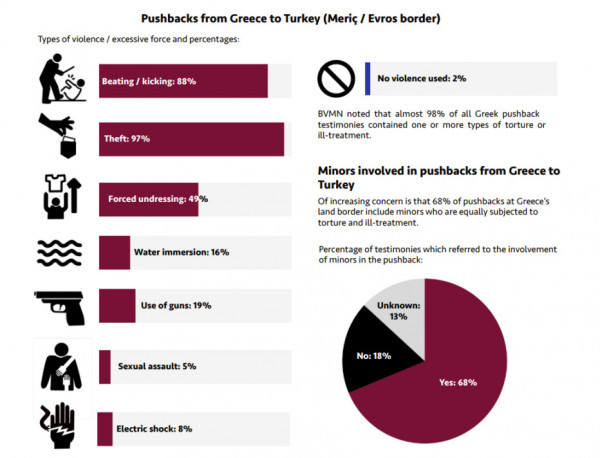
Το Δίκτυο Παρακολούθησης Συνοριακής Βίας κατέγραψε 89 περιστατικά απώθησης το 2020 που επηρέασαν 4.500 άτομα στα χερσαία σύνορα της Ελλάδας με την Τουρκία. Το 52% αυτών των ομάδων περιελάμβανε ανηλίκους.

Στο 89% αυτών των περιστατικών, οι μετανάστες υποβλήθηκαν σε «δυσανάλογη και υπερβολική χρήση βίας», συμπεριλαμβανομένων ξυλοδαρμών (ορισμένα με μεταλλικές ράβδους, ρόπαλα και βαριές μπότες) ενώ κάποιους τους άφησαν να βυθιστούν. 

Ορισμένοι μετανάστες υπέστησαν σοβαρό τραυματισμό, όπως απώλεια των αισθήσεων ή σπασμένα κόκαλα.

Από το 2020 κάποιοι μετανάστες συνελήφθησαν μακριά από τα σύνορα σε μέρη όπως η Θεσσαλονίκη, οδηγήθηκαν στα σύνορα του Έβρου και επαναπροωθήθηκαν, σύμφωνα με καταγγελίες. 

Η Mare Liberum μέτρησε 321 απωθήσεις στο Αιγαίο το 2020. Η ομάδα υπολογίζει ότι 4.700 άνθρωποι έχουν εγκαταλειφθεί σε σωσίβιες λέμβους από το Ελληνικό Λιμενικό Σώμα στο Αιγαίο από τον Μάρτιο του 2020.

Η Mare Liberum υποστηρίζει επίσης ότι υπήρξαν τουλάχιστον 17 περιπτώσεις το 2021 όπου η Ελληνική Ακτοφυλακή έριξε ανθρώπους στη θάλασσα, χωρίς βάρκα ή σωσίβιο, με αποτέλεσμα να χάσουν τη ζωή τους τουλάχιστον τρεις άνθρωποι.

3/12/2021

https://www.in.gr/2021/12/03/greece/prosfygiko-ellada-paraviazei-tin-xarta-themeliodon-dikaiomaton-apofasi-kolafos-apo-germaniko-dikastirio/

Πέμπτη 30 Δεκεμβρίου 2021

ΔΙΕΡΜΗΝΕΑΣ ΤΗΣ FRONTEX ΚΑΤΑΓΓΕΛΛΕΙ ΤΗΝ ΕΛ.ΑΣ. ΓΙΑ ΕΠΑΝΑΠΡΟΩΘΗΣΗ


Διερμηνέας της Frontex, κάτοικος Ιταλίας που βρισκόταν σε αποστολή στον Έβρο, καταγγέλλει επίσημα τις ελληνικές αρχές ότι του επιτέθηκαν βίαια και τον επαναπροώθησαν παράνομα στην Τουρκία το Σεπτέμβριο μαζί με ομάδα άλλων προσφύγων, περνώντας τον προφανώς κι αυτόν για πρόσφυγα. Ο διερμηνέας έχει υποβάλει καταγγελία στο Μηχανισμό Αναφοράς Παραπόνων της Frontex, συνοδευόμενη από οπτικοακουστικό υλικό, βίντεο και ηχογραφήσεις, από το περιστατικό.

Την ιδιαίτερα σοβαρή καταγγελία την φέρνει στο φως ρεπορτάζ των New York Times, που επικαλείται πληροφορίες από Ευρωπαίους αξιωματούχους, ενώ την επιβεβαιώνει η Ευρωπαία Επίτροπος Ιλβα Γιόχανσον.

Όπως δηλώνει στην εφημερίδα η κ. Γιόχανσον, τηλεφώνησε η ίδια την Παρασκευή στον υπάλληλο της Frontex και είναι "εξαιρετικά ανήσυχη από τη μαρτυρία του", καθώς μάλιστα η καταγγελία αφορά την επαναπροώθηση τουλάχιστον άλλων 100 προσφύγων.

«Ήμουν εξαιρετικά ανήσυχη μετά τη απευθείας και σε βάθος συνομιλία μου με το πρόσωπο αυτό στις 25 Νοεμβρίου. Επιπρόσθετα στην προσωπική του ιστορία, η καταγγελία του ο΄τι δεν πρόκειται για μεμονωμένο περιστατικό κάνει το θέμα σοβαρό», σημειώνει η κ. Γιόχανστον.

Η μαρτυρία και τα τεκμήρια του διερμηνέα ταιριάζουν με πληθώρα άλλες μαρτυρίες και τεκμήρια που έχουν δημοσιοποιηθεί τα τελευταία χρόνια για τις βίαιες και παράνομες πρακτικές των ελληνικών αρχών στα σύνορα.

Ο διερμηνέας κατάγεται από το Αφγανιστάν και ζει νόμιμα στην Ιταλία για χρόνια. Εργάζεται ως υπάλληλος στης Frontex και βρισκόταν σε αποστολή στον Έβρο. Επέστρεφε με λεωφορείο στη Θεσσαλονίκη για μερικές ημέρες άδεια, όταν η αστυνομία σταμάτησε το λεωφορείο και τον έβγαλε έξω μαζί με άλλους επιβάτες πρόσφυγες.

Όπως καταγγέλλει, τους μετέφεραν σε απομακρυσμένη αποθήκη, όπου κρατήθηκαν μαζί τουλάχιστον 100 πρόσφυγες, ανάμεσά τους γυναίκες και παιδιά. Τους χτύπησαν άγρια, τους ανάγκασαν να γδυθούν, τους πήραν κινητά, χρήματα και έγγραφα. Ο υπάλληλος της Frontex προσπάθησε να ενημερώσει την αστυνομία για την ιδιότητά του, αλλά η προσπάθεια αυτή αντιμετωπίστηκε με γέλια και περισσότερα χτυπήματα, όπως λέει. Αργότερα τους έβαλαν σε βάρκες και τους μετέφεραν στην Τουρκία μέσω του Έβρου.

Ο διερμηνέας κατάφερε να φτάσει στην Κωνσταντινούπολη, κατέφυγε στο ιταλικό προξενείο και επέστρεψε στην Ιταλία στις 18 Σεπτεμβρίου.

Σύμφωνα με τους New York Times, η κ. Γιόχανσον επικοινώνησε τη Δευτέρα με τον υπουργό Προστασίας του Πολίτη Τάκη Θεοδωρικάκο, ο οποίος υποσχέθηκε ότι θα διερευνήσει την υπόθεση.

H εφημερίδα παραθέτει δήλωση του γραφείου τύπου του υπουργείου ότι η Εθνική Αρχή Διαφάνειας θα ερευνήσει το περιστατικό και θα δημοσιοποιήσει τα ευρήματα, αλλά η προκαταρκτική έρευνα δείχνει ότι τα γεγονότα δεν έγιναν όπως παρουσιάζονται.

Εκπρόσωπος της Frontex δηλώνει στην εφημερίδα ότι η υπηρεσία ερευνά την καταγγελία και ότι δεν μπορεί να σχολιάσει την υπόθεση, όσο διαρκεί η έρευνα.


1/12/2021

https://www.efsyn.gr/ellada/koinonia/321627_diermineas-tis-frontex-kataggellei-tin-elas-gia-epanaproothisi

[EN] E.U. INTERPRETER SAYS GREECE EXPELLED HIM TO TURKEY IN MIGRANT ROUNDUP


The man’s story echoes complaints from human-rights groups that Greek authorities often expel asylum seekers indiscriminately and violently.

The Turkish coast guard rescuing a group of Afghan migrants in July who said they were pushed back out to sea by the Greek authorities.Credit...Ivor Prickett for The New York Times

ATHENS — For years, Greek officials have denied complaints from human rights groups that the country’s border agents have brutalized migrants and forcibly pushed them back into Turkey. They have dismissed the allegations as fake news or Turkish propaganda.

Now a single case may force a reckoning.

A European Union interpreter says that in September, Greek border guards mistook him for an asylum seeker, assaulted him and then forced him across the border into Turkey alongside dozens of migrants.

His allegation is particularly problematic for Greek officials because he is a legal European Union resident employed by the E.U. border agency, Frontex. And he has turned over evidence to the agency to support his claims of abuse, according to European officials dealing with his case.

The European Union, which has mostly looked the other way on abuses of migrants, is now being forced to confront the problem.

Surfacing in the wake of an acute border crisis with Belarus over migrants, the case has commanded the attention of senior European leaders for weeks. Ylva Johansson, the European commissioner for migration, said she called the interpreter on Friday to discuss his accusations.

“After direct, in-depth discussion with the person on Nov. 25, I was extremely concerned by his account,” Ms. Johansson said. “In addition to his personal story, his assertion that this was not an isolated case is a serious issue,” she added, saying he told her he had witnessed at least 100 migrants who were pushed over the border and sometimes roughed up.

However, a Greek government ministry statement cast doubt on his account, saying initial inquiries suggested “the facts are not as presented.”

Credit...The New York Times

The interpreter told The New York Times that he had filed a complaint with Frontex, and European officials confirmed this. They said the complaint was being treated as credible because of the man’s position and the documentation he provided, including audio and video recordings.

The man asked not to be identified out of concern for his safety and his livelihood. Two European officials, speaking on condition of anonymity because they were not authorized to discuss the case with reporters, confirmed his identity.

He said that he and many of the migrants he was detained with were beaten and stripped, and that the police seized their phones, money and documents. His attempts to tell the police who he was were met with laughter and beatings, he said. He said he was taken to a remote warehouse where he was kept with at least 100 others, including women and children. They were then put on dinghies and pushed across the Evros River into Turkish territory.

His accusations were similar to those from human-rights groups, along with mounting evidence gathered by migrants and reporters, all claiming that Greek authorities routinely round up and expel migrants without permitting them to complete asylum requests — often in an indiscriminate and violent way. Greek authorities have also been accused of pushing back migrants in flimsy dinghies in the Aegean Sea, sometimes disabling the engines and leaving the migrants to drift back into Turkish waters. Greece has denied the accusations.

The man’s story came to light at a critical moment in Europe’s reckoning with its practices in dealing with migrants, which have drawn renewed scrutiny after a standoff at the Belarus-Poland border that left 12 migrants dead. In a bid to put pressure on the European Union over a geopolitical standoff, Belarus lured migrants into its territory, left them in a frigid forest and encouraged them to cross into E.U. countries, including Poland. Polish authorities repelled them, sometimes violently.


Credit...Giannis Papanikos/Associated Press

That crisis, together with a similar standoff between Greece and Turkey last year with asylum seekers caught in the middle, has laid bare a growing gulf between European laws and norms in treating asylum seekers, and the reality on the ground.

Public opinion toward immigration soured after the Syrian war brought more than one million refugees to Europe in 2015-16. Still, in much of the European Union, politicians and citizens oppose inhumane and illegal practices such as rounding up migrants and expelling them without due process.

But governments at Europe’s frontiers, such as Greece, view migration laws and procedures as out of date and out of step with the current climate, contending that they were designed before the mass population displacements seen in recent years.

Prime Minister Kyriakos Mitsotakis of Greece, in remarks this month, rejected accusations of abuses against migrants by the Greek authorities. He called his migration policy “tough, but fair.”

Ms. Johansson said she had spoken on Monday with the Greek minister for citizen protection, Takis Theodorikakos, and he promised to investigate the interpreter’s claims.

“The independent National Transparency Authority will conduct an investigation and will be open about its findings as always, but preliminary inquiries in this case appear to suggest the facts are not as presented,” the ministry’s media office said in a statement.


Credit...James Hill for The New York Times

Sophie in ‘t Veld, a Dutch member of the European Parliament, said the interpreter’s allegations were part of a pattern of growing E.U. brutality toward migrants and asylum seekers.

“With tens of thousands of victims who drowned in the Mediterranean, thousands languishing in what has been described as concentration camps in Libya, the misery in the camps on the Greek islands for so many years, people drowning in the Channel or freezing to death on the border between Belarus and the E.U., the European Commission cannot claim anymore that these are incidents, accidents, exceptions,” she said.

“It is not a policy failure,” she added. “It is policy.”

Greece, one of the main gateways into the European Union for migrants, has long maintained that it is being asked to rescue, process and host too many people arriving from Turkey, a hostile neighbor that often encourages asylum seekers to go to Greece to provoke the government there and to press its demands with the European Union.

Under Greek and E.U. laws, the Greek authorities are required to assess asylum requests for all who seek protection, to house asylum seekers in humane conditions and, if they are rejected, to repatriate them safely.

Efforts to more fairly distribute asylum seekers across the European Union have stalled, as many member countries prefer to send funding to Greece and other frontier nations to host asylum seekers, and keep them away from their territories.

Frontex and the European Asylum Support Office pay and deploy hundreds of employees to ensure that the bloc’s external borders are guarded while human rights laws are upheld.


Credit...Aris Messinis/Agence France-Presse — Getty Images

The interpreter, who is originally from Afghanistan, has lived for years as a legal resident in Italy. He was employed by Frontex as a member of an E.U.-funded team of experts deployed to help the border guards communicate with asylum seekers.

He had been working in the border region of Evros alongside Greek and E.U. guards, and was on his way to Thessaloniki, Greece’s second-largest city, for a break when the police pulled him and a number of migrants off a bus, he said.

After they were beaten, detained and forced into Turkey, the interpreter said, he managed to reach Istanbul, where he received consular assistance from the Italian authorities, and was eventually repatriated to Italy on Sept. 18.

The Italian foreign ministry did not immediately respond to requests for comment.

A Frontex spokesman said the agency was investigating the report and could not comment further as long as the investigation continues.


Matina Stevis-Gridneff is the Brussels correspondent for The New York Times, covering the European Union. She joined The Times after covering East Africa for The Wall Street Journal for five years. @MatinaStevis

A version of this article appears in print on Dec. 2, 2021, Section A, Page 8 of the New York edition with the headline: E.U. Interpreter Says Greece Expelled Him to Turkey in Migrant Roundup. Order Reprints | Today’s Paper | Subscribe


1/12/2021

[EN] BALKAN REGION REPORT – OCTOBER 2021


SUMMARY AND ANALYSIS OF PUSHBACKS AND INTERNAL VIOLENCE DOCUMENTED BY BVMN DURING THE MONTH OF OCTOBER.

In October the Border Violence Monitoring Network (BVMN) shared 36 testimonies of pushbacks impacting 986 people-on-the-move across the Balkans. This report brings together first hand accounts from a range of countries in the region to look at the way European Union states and other actors are affecting systemic violence towards people crossing borders.


BVMN is a network of watchdog organisations active in the Balkans, Greece and Turkey including No Name Kitchen, Rigardu, Are You Syrious, Mobile Info Team, Disinfaux Collective, Josoor, [re:]ports Sarajevo, InfoKolpa, Centre for Peace Studies, Mare Liberum, Collective Aid and Fresh Response. Combining insights from these different members, the report analyses among other things:

  • Dead and missing in Evros
  • Romanian pushbacks and developments in Majdan
  • Apprehensions near the Slovenian-Italian border
  • Lighthouse Reports video and Ministry response
  • Pushbacks in the Aegean
  • Squat evictions in Serbia and Bosnia Herzegovina


The report also looks at the rise in removals from Turkey, arrival conditions for people reaching Trieste in Italy, the lastest Mare Liberum monitoring mission and the nationwide evacuation simulation carried out in many of Greece’s RICs. In sum, the border violence which has for so long been a mainstay of domestic and externalised EU policy continued unabated into Autumn, in spite of continual and well founded evidence exposing perpetrators. In a wider view, this report connects up such impunity with the burgeoning trend of endemic pushback violence at other borders across the bloc, most notably at the Polish-Belarussian border, but also in Germany, where fascists have increased their mobilisation at the country’s eastern border.

12/11/2021

https://www.borderviolence.eu/balkan-region-report-october-2021/#more-18941


ΈΚΘΕΣΗ-ΚΑΤΑΠΕΛΤΗΣ ΓΙΑ ΤΙΣ ΕΠΑΝΑΠΡΟΩΘΗΣΕΙΣ ΑΠΟ ΤΙΣ ΕΛΛΗΝΙΚΕΣ ΑΡΧΕΣ - ΤΑΦΟΣ ΠΡΟΣΦΥΓΩΝ Ο ΕΒΡΟΣ

In.gr


Όσον αφορά την Ελλάδα η έκθεση επικεντρώνεται σε υποθέσεις νεκρών και αγνοούμενων προσφύγων στον Έβρο, στην προσπάθειά τους να περάσουν στην Ελλάδα από την Τουρκία.


Τον Οκτώβριο, το Δίκτυο Παρακολούθησης της Βίας στα Σύνορα (BVMN) συγκέντρωσε 36 μαρτυρίες επαναπροωθήσεων που σχετίζονταν με 986 άτομα εν κινήσει στα Βαλκάνια.

Αυτή η έκθεση φιλοξενεί μαρτυρίες από πρώτο χέρι από μια σειρά χωρών της περιοχής με σκοπό να έρθει στο φως ο τρόπος με τον οποίο τα κράτη της Ευρωπαϊκής Ένωσης επιτηδεύονται σε συστημική βία εναντίον ανθρώπων που περνούν τα σύνορα.

Όσον αφορά την Ελλάδα η έκθεση επικεντρώνεται σε υποθέσεις νεκρών και αγνοουμένων στον Έβρο, στην προσπάθειά τους να περάσουν στην Ελλάδα από την Τουρκία.

Ο θανάσιμος κίνδυνος είναι εμφανής σε δύο υποθέσεις. Η μια ήταν η υπόθεση ενός φορτηγού- πλοίου κοντά στην Κω, που μετέφερε 400 πρόσφυγες και η δεύτερη πρόκειται για μια επαναπροώθηση, που σύμφωνα με το BVMN, καταγράφηκε ανοιχτά της Ικαρίας. «Και οι δύο περιπτώσεις ενισχύουν το κλίμα συνεχούς βίας κατά των ανθρώπων που πλέουν στο Αιγαίο» αναφέρει η έκθεση.

Το συμβάν στην Κω

Στις 29 Οκτωβρίου, το Aegean Boat Report μοιράστηκε πληροφορίες σχετικά με μια συνεχιζόμενη επαναπροώθηση περίπου 400 ατόμων από το Λιμενικό Σώμα Ελληνικής Ακτοφυλακής (HCG), ενώ τα τοπικά μέσα ανέφεραν στις 28 ότι το Λιμενικό Σώμα δεν μπόρεσε να βρει τους νεοαφιχθέντες που βρίσκονταν σε κίνδυνο.

«Ωστόσο, είναι σχεδόν αδύνατο να πιστέψει κανείς ότι ένα πλήρως εξοπλισμένο σκάφος της ακτοφυλακής δεν θα μπορούσε να βρει μια τόσο μεγάλη ομάδα ανθρώπων σε ένα φορτηγό-πλοίο» αναφέρει η έκθεση.

Αρχικά με κατεύθυνση προς Ιταλία, το πλοίο αντιμετώπισε προβλήματα με τον κινητήρα και χρειάστηκε να εκδώσει κλήση στις 28 Οκτωβρίου.

«Φαίνεται περίεργο το γεγονός ότι το Λιμενικό Σώμα είπε σε τοπικά ΜΜΕ ότι δεν έχουν βρει καμία από τις »υποτιθέμενες» νέες αφίξεις, καθώς το Aegean Boat Report έλαβε φωτογραφίες πλοίου της Ακτοφυλακής στη σκηνή – κάτι που τελικά σημαίνει ότι οι αρχές έλεγαν ψέματα στον Τύπο για να το εκτελέσουν ακόμα άλλη μια επαναπροώθηση. Η θέση αυτή ενισχύεται περαιτέρω από το γεγονός ότι οι συνοριοφύλακες ρυμούλκησαν το φορτηγό πλοίο προς την Τουρκία.


»Ενώ ρυμουλκούνταν πέρα ​​δώθε για 24 ώρες από το Ελληνικό Λιμενικό Σώμα χωρίς κανένα σαφές σχέδιο για το πού θα αποβιβάσει τους επιβάτες, δεν δόθηκε καμια βοήθεια ή ακόμη και νερό στους παρευρισκόμενους στο σκάφος. Το γεγονός ότι οι άνθρωποι στο πλοίο ταξίδευαν ήδη για λίγες μέρες χωρίς φαγητό, νερό ή άλλα είδη πρώτης ανάγκης, καθιστά ακόμη πιο απάνθρωπη την έλλειψη υποστήριξης που παρέχει το Λιμενικό Σώμα. Μετά από τέσσερις ημέρες στη θάλασσα, τελικά οι άνθρωποι μεταφέρθηκαν στην Κω στις 31 Οκτωβρίου, αν και δεν κοινοποιήθηκαν περισσότερες πληροφορίες σχετικά με αυτήν την αποβίβαση».

Καταγγελία για επαναπροώθηση στην Ικαρία

Στις 17 Οκτωβρίου ένα σκάφος με 23 άτομα έφτασε στην Ικαρία. Σύμφωνα με τοπικά μέσα ενημέρωσης, 21 άτομα συνάντησαν το λιμενικό της Ικαρίας και έκτοτε δύο άτομα αγνοούνται.


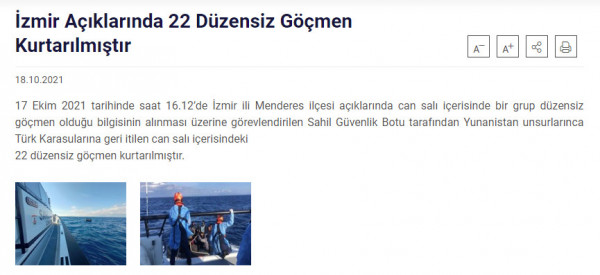
Σύμφωνα με το BVMN 22 άτομα βρέθηκαν από αστυνομικούς και ενημερώθηκαν ότι θα μεταφερθούν στη Σάμο. 

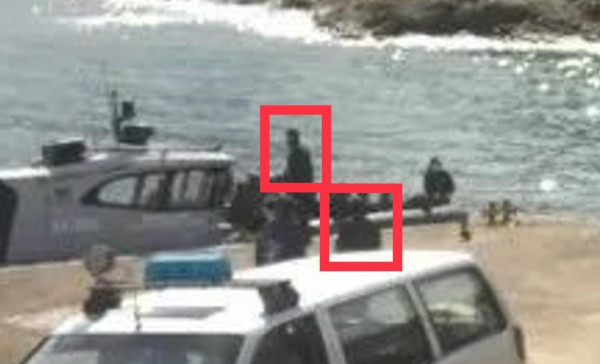
Ωστόσο, η ομάδα δεν έφτασε ποτέ στη Σάμο και το απόγευμα της 17ης, 22 άτομα βρέθηκαν με σωσίβιες σχεδίες από το Τουρκικό Λιμενικό Σώμα (TCG). Το Aegean Boat Report επιβεβαιώνει ότι τα ίδια άτομα που έφτασαν στην Ικαρία επέβαιναν στο σκάφος που διασώθηκε από το TCG. 

Νεκροί και αγνοούμενοι στον Έβρο

Η άφιξη του χειμώνα φέρνει νέους κινδύνους για τους πρόσφυγες που επιδιώκουν να φτάσουν στην Ελλάδα μέσω των χερσαίων συνόρων του Έβρου.

Ο κίνδυνος θανάτου από πνιγμό ή έκθεση στο κρύο αποτελεί βασική απειλή για όσους προσπαθούν να διασχίσουν αυτόν τον δρόμο και όσους έχουν απωθηθεί από την αστυνομία.

Αυτό οφείλεται, σύμφωνα με το BVMN στην άμεση σωματική βία εκ μέρους των αρχών στο πλαίσιο των απωθήσεων, αναγκάζοντας τους ανθρώπους να πηδήξουν από λέμβους στη μέση του ποταμού ή αφήνοντάς τους αποκλεισμένους στη μέση του ποταμού, με αποτέλεσμα να παρασυρθούν από ισχυρά ρεύματα.

Κατά τη διάρκεια του χειμώνα, η στάθμη του νερού στον Έβρο είναι υψηλότερη και οι θερμοκρασίες πέφτουν σταθερά κάτω από το μηδέν, αυξάνοντας δραστικά τους κινδύνους για όσους επιχειρούν να περάσουν.

Όπως αναφέρει ο Έλληνας ιατροδικαστής Παύλος Παυλίδης από το νοσοκομείο Αλεξανδρούπολης: «Όσοι καταφέρνουν να διασχίσουν τον Έβρο βγαίνουν από το ποτάμι βρεγμένοι και μέσα στο κρύο. Μετά χάνονται στα γύρω βουνά. Κρύβονται από την αστυνομία. Πεθαίνουν από τους κρύο».

Το νεκροταφείο μεταναστών

Ήδη φέτος έχουν ανασυρθεί 38 σοροί από την ελληνική πλευρά του ποταμού Έβρου, σύμφωνα με την έκθεση.

Πολλές σοροί που ανασύρθηκαν από τον ποταμό και τη γύρω περιοχή είναι αγνώριστες καθώς μπορεί να μην βρίσκονται για εβδομάδες αν όχι μήνες.

Επιπλέον, δεν υπάρχουν συγκεντρωτικά στοιχεία για θανάτους στην τουρκική πλευρά του ποταμού και είναι πιθανό πολλά πτώματα να μην ανακτηθούν ποτέ.

Εθελοντές διαπίστωσαν ότι επτά άνθρωποι είχαν ταφεί ανώνυμα στο νεκροταφείο στην Erdine μόνο τον Σεπτέμβριο του 2021.

Άτυπες ομάδες υποστήριξης στο Facebook και άλλες πλατφόρμες έχουν «φυτρώσει» τα τελευταία χρόνια, όπου συγγενείς αναζητούν νέα αγαπημένων προσώπων που έχουν χαθεί.

Όσοι βρίσκονται συχνά μεταφέρονται στο Πανεπιστημιακό Νοσοκομείο Αλεξανδρούπολης, όπου το προσωπικό προσπαθεί να τους αναγνωρίσει χρησιμοποιώντας έγγραφα που βρέθηκαν, καθώς και χαρακτηριστικά όπως ουλές και τατουάζ.

Όσοι δεν έχουν ταυτοποιηθεί θάβονται σε νεκροταφείο σε μικρό ανώνυμο νεκροταφείο μεταναστών στο Σιδηρό. 

Παράλληλα με την άμεση σωματική βία των ελληνικών Αρχών και την αυξανόμενη «στρατιωτικόποίηση» του Έβρου με χρήση drones, υπέρυθρων καμερών, και «κανονιών ήχου», η χρήση της ίδιας της περιοχής ως μιας μεθόδου αποτροπής για όσους προσπαθούν να περάσουν, έχει γίνει ένας ολοένα και πιο σημαντικός παράγοντας.

«Hybrid collectif»

Μιλώντας για ένα παρόμοιο φαινόμενο κατά μήκος των συνόρων των ΗΠΑ με το Μεξικό, όπου η αρχιτεκτονική των συνοριακών φράχτων και των ελέγχων ωθεί τους ανθρώπους εν κινήσει να επιχειρήσουν διέλευση από τα πιο επικίνδυνα μέρη της ερήμου, ο ανθρωπολόγος Jason de Leon χρησιμοποιεί τον όρο «hybrid collectif» για να περιγράψει πώς μια σειρά ανθρώπινων και μη παραγόντων (αρπακτικά της ερήμου/άγρια ​​ζωή, δόλια εδάφη μακριά από κάθε είδους υποδομή, καταφύγιο ή πηγή νερού, άγρυπνη βία, κ.λπ.) κάνουν τη «βίαιη δουλειά» της συνοριακής περιπολίας.

Στην Ελλάδα, κάτι πολύ παρόμοιο συμβαίνει, ιδιαίτερα όσον αφορά τον ποταμό του Έβρου όπου έχουν δημιουργηθεί πιο εχθρικές συνθήκες για τη διέλευση των προσφύγων.

Διαβάστε την έκθεση εδώ.

24/11/2021

https://www.in.gr/2021/11/24/greece/ekthesi-katapeltis-gia-tis-epanaproothiseis-apo-tis-ellinikes-arxes-tafos-prosfygon-o-evros/