Search...

Τρίτη 2 Μαρτίου 2021

[EN] UNHCR WARNS ASYLUM UNDER ATTACK AT EUROPE'S BORDERS, URGES END TO PUSHBACKS AND VIOLENCE AGAINST REFUGEES


Shoes, a ball and a hat caught on a three layered barbed-wire fence at the Fylakio reception and identification centre near the Greek-Turkish border.  © UNHCR/Achilleas Zavallis

Alarmed at the increasing frequency of expulsions and pushbacks of refugees and asylum-seekers at Europe’s land and sea borders, UNHCR, the UN Refugee Agency, is calling for states to investigate and halt these practices.

“UNHCR has received a continuous stream of reports of some European states restricting access to asylum, returning people after they have reached territory or territorial waters, and using violence against them at borders,” said UNHCR’s Assistant High Commissioner for Protection, Gillian Triggs.

“The pushbacks are carried out in a violent and apparently systematic way. Boats carrying refugees are being towed back. People are being rounded-up after they land and then pushed back to sea. Many have reported violence and abuse by state forces.”

People arriving by land are also being informally detained and forcibly returned to neighboring countries without any consideration of their international protection needs.

The 1951 Refugee Convention, the European Convention on Human Rights and EU law require states to protect the right of people to seek asylum and protection from refoulement, even if they enter irregularly. Authorities cannot automatically deny entry to or return people without undertaking an individual assessment of those in need of protection.  

“Respecting human lives and refugee rights is not a choice, it’s a legal and moral obligation. While countries have the legitimate right to manage their borders in accordance with international law, they must also respect human rights. Pushbacks are simply illegal.” said Triggs.

“The right to seek asylum is a fundamental human right. The COVID-19 pandemic provides no exception; it is possible to protect against the pandemic and to ensure access to fair and speedy asylum processes.”

UNHCR has made its concerns clear to European states. The refugee agency calls for urgent inquiries into alleged violations and mistreatment based on credible testimonies that are corroborated by non-governmental organizations, media and open-source reporting.

“We advocate for national independent monitoring mechanisms to be set up to ensure access to asylum, to prevent rights violations at borders, and to ensure accountability. Independent monitoring is also proposed by the EU Pact and we urge EU Member States to support this”, said Triggs.

Numbers of arrivals to the EU continue to decrease each year. The numbers of those arriving by sea and land in 2020 (95,000) decreased by 23 per cent when compared with 2019 (123,700 individuals) and by 33 per cent when compared with 2018 (141,500).

“With so few arrivals to Europe, this should be a manageable situation. It is regrettable that the issue of asylum remains politicized and divisive despite such declining numbers.”

UNHCR recognizes that some states carry a disproportionate responsibility in hosting new arrivals. UNHCR calls on other European States and the EU to demonstrate solidarity by supporting them.

UNHCR also calls on European countries to uphold their existing commitments to refugee protection by admitting asylum-seekers at their borders, rescuing them at sea and allowing disembarkation and registering and supporting new asylum seekers.

UNHCR stands ready to assist states in meeting these international asylum obligations. 


For more information on this topic, please contact:

  • In Geneva (Global), Shabia Mantoo, mantoo@unhcr.org, +41 79 337 76 50
  • In Europe, please consult the full list of UNHCR spokespeople here

28/1/2021


Πέμπτη 25 Φεβρουαρίου 2021

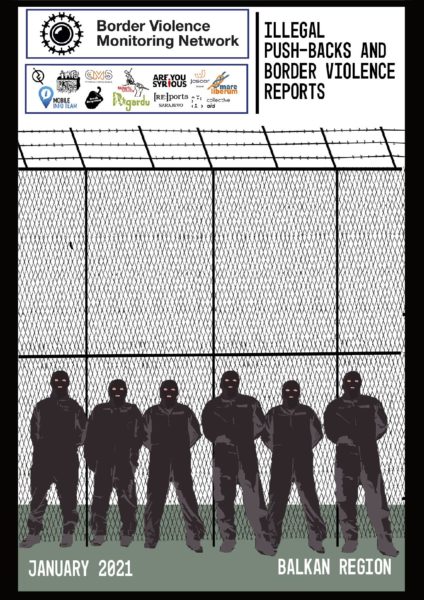
[EN] BORDER VIOLENCE MONITORING NETWORK: BALKAN REGION REPORT – JANUARY 2021


BALKAN REGION REPORT – JANUARY 2021

MONTHLY REPORT ON PUSHBACKS

In January, the Border Violence Monitoring Network (BVMN) reported on 21 illegal pushbacks, affecting 684 people in total. This report summarises the latest trends in border policing and provides updates from across the Balkans on violence being perpetrated against people-on-the-move. Specifically, patterns in pushback practice are examined alongside several important court rulings and EU level developments.

As a network comprised of grassroots organisations active in Greece and the Western Balkans, this report was produced via a joint-effort between Are You Syrious, Mobile Info Team, No Name Kitchen, Rigardu, Josoor, Disinfaux Collective, InfoKolpa, Centre for Peace Studies, Re:ports Sarajevo, Mare Liberum, Collective Aid and Fresh Response.

This report analyses among other things:

  • Practices at the Romanian border
  • Lateral pushbacks to third countries
  • Court rulings from Italy, Slovenia and Serbia
  • Frontex leaving Hungary
  • Geography of Evros/Meriç river pushbacks

The publication also looks in depth at the transit situation in the Balkans, analysing the conditions in camps, urban spaces, detention centres and border areas. When combined, these updates represent a crude and inhumane start to 2021, but one that is consistent with the violent border regimes that have defined recent years.

17/2/2021

https://www.borderviolence.eu/balkan-region-report-january-2021/

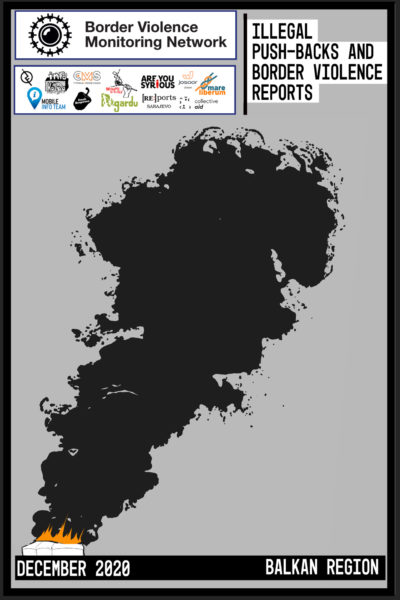
[EN] BORDER VIOLENCE MONITORING NETWORK: BALKAN REGION REPORT – DECEMBER 2020


BALKAN REGION REPORT – DECEMBER 2020

During December 2020, the Border Violence Monitoring Network (BVMN) gathered 25 testimonies of pushbacks, impacting a total of 707 people-on-the-move. This rounds off a year of consistent and compelling evidence collected by BVMN, exposing the systematised use of pushbacks at the European Union external border. In this report, updates cover a variety of violations including pushback practices, internal violence and the crisis around winterised shelter.

As a network comprised of grassroots organisations active in Greece and the Western Balkans, this report was produced via a joint-effort between Are You Syrious, Mobile Info Team, No Name Kitchen, Rigardu, Josoor, Disinfaux Collective, InfoKolpa, Centre for Peace Studies, Re:ports Sarajevo, Mare Liberum, Collective Aid and Fresh Response.

This report analyses among other things:

    • Tri-border pushbacks from Bulgaria to Turkey
    • Expulsion of transit groups from Lesvos
    • Fire pits used by the Croatian police
    • The burning of camp Lipa in Bosnia-Herzegovina
    • Legal proceedings against Croatia and Hungary
    • Gateway removals near Idomeni

Read the full report to find out more about these, and further events from the region that occured in December. Other topics include an update from activists working with arrivals in Trieste, analysis of Greek Ministry of Asylum videos, coverage of right wing attacks in Thessaloniki and fires on Samos, and challenging transit conditions for people in Serbia as winter intensifies.

15/1/2021


[EN] BORDER VIOLENCE MONITORING NETWORK: BALKAN REGION REPORT – NOVEMBER 2020


BALKAN REGION REPORT – NOVEMBER 2020

The Border Violence Monitoring Network published 29 testimonies of violent pushbacks in November, involving severe levels of physical, psychological and structural abuse. The testimonies collected last month voice the experience of 951 people-on-the-move. This report offers analysis of the trends observed in each of these accounts, showing how law enforcement carry out these violent collective expulsions at EU borders.

As a network comprised of grassroots organisations active in Greece and the Western Balkans, this report was produced via a joint-effort between Are You Syrious, Mobile Info Team, No Name Kitchen, Rigardu, Josoor, Disinfaux Collective, InfoKolpa, Centre for Peace Studies, Re:ports Sarajevo, Mare Liberum, Collective Aid and Fresh Response.

This report analyses among other things:

  • The stranding of transit groups on the Evros/Meriç River and Aegean Sea
  • A groundbreaking video analysis of a Croatian pushback
  • Violent sea and land removals from Italy
  • Denial of asylum access for people from LGBTQ+ community
  • Detention in Bulgaria and chain pushbacks to Turkey

The report also looks at the transit situation in Greece, Bosnia-Herzegovina and Serbia, as well as reviewing the arrival conditions for people in North East Italy. The onset of winter has come with a spike in squat evictions, and uncertainty about the present accomodation provision across these countries. With police pressure on transit communities and the solidarity groups supporting them, the close of 2020 is being marked with a further erosion of rights in the region.

15/12/2020

https://www.borderviolence.eu/balkan-region-report-november-2020/#more-16536


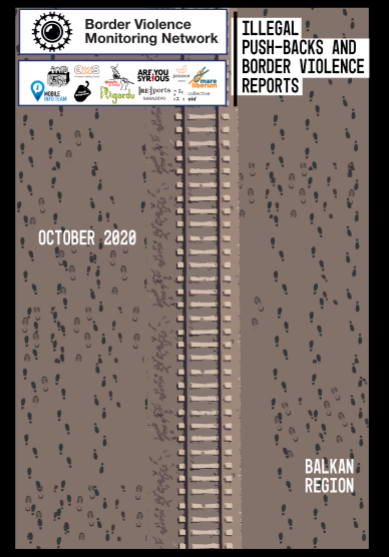
[EN] BORDER VIOLENCE MONITORING NETWORK: BALKAN REGION REPORT – OCTOBER 2020


BALKAN REGION REPORT – OCTOBER 2020


In October, the Border Violence Monitoring Network published 40 reports of pushbacks and police violence at European Union borders. These cases, which relate the experience of 1003 people-on-the-move, are a testament to the brutal border systems in place at internal and external EU borders. Respondents experienced a range of physical, psychological and structural violence, which is examined in detail in this report.

As a network comprised of grassroots organisations active in Greece and the Western Balkans, this report was produced via a joint-effort between Are You Syrious, Mobile Info Team, No Name Kitchen, Rigardu, Josoor, InfoKolpa, Centre for Peace Studies, Re:ports Sarajevo, Mare Liberum, Collective Aid and Fresh Response.

This report analyses among other things:

  • Police violence and incidents of rape at the Croatian border
  • Organised pushbacks from inland Greece
  • Abuse at Italy’s maritime and land borders
  • Ban on outreach in Bosnia-Herzegovina
  • Anti-migrant protests in Serbia and Italy
  • Pushbacks from Hungary

Read the full report for further updates on the criminalisation of solidarity work in Croatia, forced removals to the South of Serbia, Frontex pushbacks in the Aegean and deaths of people-on-the-move killed on the route last month.


17/11/2020

https://www.borderviolence.eu/balkan-region-report-october-2020/

Κυριακή 31 Ιανουαρίου 2021

Η «ΜΑΥΡΗ ΒΙΒΛΟΣ» ΤΟΥ ΠΡΟΣΦΥΓΙΚΟΥ ΚΑΙ ΤΩΝ ΕΠΑΝΑΠΡΟΩΘΗΣΕΩΝ


Η «Μαύρη Βίβλος» του προσφυγικού, ένα ογκώδες έργο 1.500 σελίδων στο οποίο περιλαμβάνονται τεκμήρια από εκατοντάδες παράνομες επαναπροωθήσεις αιτούντων άσυλο από τις ευρωπαϊκές αρχές, κυκλοφόρησε την περασμένη εβδομάδα στις Βρυξέλλες και παραδόθηκε στην Κομισιόν.

Το «Black Book of Pushbacks», όπως ονομάζεται, συντάχθηκε από τον οργανισμό Border Violence Monitoring Network (BVMN) και αποτελεί μια συλλογή από 892 μαρτυρίες ομάδων, που περιγράφουν λεπτομερώς τις εμπειρίες 12.654 θυμάτων παραβιάσεων των ανθρωπίνων δικαιωμάτων κατά τη διαδρομή τους στον λεγόμενο «βαλκανικό δρόμο» στη διάρκεια της προσφυγικής κρίσης των τελευταίων ετών.

«Η ‘Μαύρη Βίβλος’ με τις μαρτυρίες παράνομων επαναπροωθήσεων είναι συγκλονιστικό με την έννοια της συλλογής σχεδόν 13.000 μαρτυριών από συνανθρώπους μας που έχουν βάναυσα τρομοκρατηθεί και σε πολλές περιπτώσεις κακοποιηθεί από χώρες της λεγόμενης βαλκανικής οδού μεταξύ των οποίων και η Ελλάδα η οποία το τελευταίο διάστημα έχει συστηματοποιήσει τη παράνομη αυτή διαδικασία. Σε αυτές τις διαδικασίες συμμετέχει και η Frontex και άλλες ευρωπαϊκές υπηρεσίες πέραν των ελληνικών αρχών όπως αστυνομία και στρατός και το λιμενικό σώμα», δήλωσε ο Επαμεινώνδας Φαρμάκης, ιδρυτής της ΜΚΟ HumanRights360.

«Ακόμα και ανήλικα παιδιά έχουν παράνομα επιστραφεί στη Τουρκία ή έχουν αφεθεί σε μια σχεδία ανοικτά στη θάλασσα. Αυτές οι εγκληματικές και απάνθρωπες ενέργειες πρέπει να σταματήσουν! Ελπίζουμε ότι αυτή η συλλογή των μαρτυριών θα κινητοποιήσει επιτέλους την ΕΕ να απαιτήσει περισσότερη διαφάνεια από κράτη μέλη όπως η Ελλάδα και να επιβάλλει κυρώσεις ώστε να σταματήσουν αυτές οι παράνομες διαδικασίες».

Κάθε μέρα χιλιάδες άνθρωποι, κυρίως από τη Νότια Ασία, τη Μέση Ανατολή και τη Βόρεια Αφρική, προσπαθούν να διασχίσουν τα Βαλκάνια για να φτάσουν στην Ευρώπη. Πρόκειται για ένα βασανιστικό ταξίδι, στο οποίο οι άνθρωποι αναγκάζονται να περάσουν το μεγαλύτερο μέρος του ταξιδιού σε αυτοσχέδια στρατόπεδα ή σε σιδηροδρομικούς σταθμούς.

Εδώ και χρόνια οι φιλανθρωπικές οργανώσεις καταγγέλλουν τις πολιτικές των κρατών υποδοχής και μεταφοράς, καθώς οι αιτούντες άσυλο ξυλοκοπούνται, ληστεύονται και δέχονται βία συστηματικά. Μεταξύ Ιανουαρίου και Νοεμβρίου 2020, το Δανέζικο Συμβούλιο Προσφύγων (Danish Refugee Council) κατέγραψε 15.672 επαναπροωθήσεις από την Κροατία προς τη Βοσνία-Ερζεγοβίνη, με πάνω από το 60% αυτών να γίνεται με άσκηση βίας.

«Αυτό το βιβλίο – στο οποίο συγκεντρώνουμε τέσσερα χρόνια μελέτης και καταγραφής περιστατικών – επισημαίνει το μεγάλο κενό στην καταγραφή περιστατικών καταπάτησης των ανθρωπίνων δικαιωμάτων από κρατικές και ευρωπαϊκές αρχές, όπως ο Frontex», δήλωσε ο Σιμόν Κάμπελ, συντονιστής της έκδοσης. «Οι μαρτυρίες που έχουμε καταγράψει αποτελούν ένα σημαντικό φάκελο με πλούτο αποδεικτικών στοιχείων. Περιγράφουν λεπτομερώς τις συστηματικές ενέργειες εναντίον ανθρώπων που αναζητούν ένα καλύτερο αύριο και αιτούνται άσυλο, περιλαμβάνει παραβιάσεις του διεθνούς δικαίου για το άσυλο και τις επιαναπροωθήσεις, καθώς και παραβιάσεις που βρίσκονται στον πυρήνα του Χάρτη των Ανθρωπίνων Δικαιωμάτων, όπως τα βασανιστήρια και οι εκβιασμοί».

Περισσότεροι από 15 οργανισμοί έχουν συνεισφέρει σε αυτή την έκδοση, που περιέχει χάρτες, ντοκουμέντα, φωτογραφικό υλικό και άλλες βασικές πληροφορίες. Η έκδοση πραγματοποιήθηκε με τη συμβολή και στήριξη της ευρωομάδας της Αριστεράς στο Ευρωπαϊκό Κοινοβούλιο.

Η Μάλιν Μπγιόρκ και ο Μιγκέλ Ουρμπάν κρατώντας τον πρώτο και δεύτερο τόμο της έκδοσης, πριν τους παραδόσουν στην Επίτροπο Ίλβα Γιόχανσον, στις Βρυξέλλες. Credit: Quentin Bruno/The Left.

Η ευρωβουλεύτρια Μάλιν Μπγιόρκ, μέλος της επιτροπής πολιτικών ελευθεριών, δικαιοσύνης και εσωτερικών υποθέσεων του Ευρωπαϊκού Κοινοβουλίου και ο Μιγκέλ Ουρμπάν, εκ των συνιδρυτών των Podemos, παρουσίασαν και παρέδωσαν την «Μαύρο Βίβλο» στην Επίτροπο της ΕΕ για το Άσυλο, Ίλβα Γιόχανσον, στις Βρυξέλλες.

Μιλώντας για τη δημοσίευση της έκδοσης, η Γερμανίδα ευρωβουλεύτρια Κορνήλια Ερνστ σημείωσε ότι «Είμαστε σοκαρισμένοι από τις καταθέσεις και τις περιγραφές ανελέητης, σαδιστικής και εξευτελιστικής βίας, που θυμίζουν πρακτικές δικτατορικών καθεστώτων. Η έκδοση αυτή ρίχνει φως σε αυτό το σκοτεινό κεφάλαιο της ΕΕ. Η ελπίδα μας είναι ότι θα συμβάλει στον τερματισμό αυτών των εγκλημάτων και στην απόδοση ευθυνών στις κυβερνήσεις που δρουν με τέτοιο ντροπιαστικό, παραβατικό και βίαιο τρόπο κατά ανθρώπων».

«Αν και οι αρχές και κυβερνήσεις αρνούνται καθετί που περιέχεται στην έκδοση, εμείς από την πλευρά μας έχουμε αναλυτικά στοιχεία που τεκμηριώνουν αυτές τις παράνομες ενέργειες», δήλωσε ο Χόουπ Μπάρκερ, εκπρόσωπος της BVMN. «Φανταστείτε ότι αυτές είναι μόνο οι ιστορίες που το δίκτυό μας κατάφερε να ηχογραφήσει. Η πραγματικότητα είναι πολύ πιο σκοτεινή και οι υποθέσεις πολύ περισσότερες».


26/12/2020

https://rosa.gr/i-mayri-vivlos-toy/

[ΕΝ] LAUNCH EVENT: THE BLACK BOOK OF PUSHBACKS


First edition of the 1500 page book on illegal cross-border pushbacks (GUE/NGL)

Today the Border Violence Monitoring Network (BVMN) are releasing a landmark publication on illegal border pushbacks. The ‘Black Book of Pushbacks’ brings together a wealth of evidence on these violations, analysing in detail the way that these brutal acts have become systematised at the external border and renewing calls to end impunity for perpetrating EU authorities.

A 1500-page ‘Black Book’ that documents the horrific violence suffered by over 12,000 people at the hands of authorities on the EU’s external borders has been released today – International Migrants Day – by The Left in the European Parliament. Compiled by BVMN and printed over two volumes, the ‘Black Book of Pushbacks’ is a collection of hundreds of testimonies of migrants and asylum seekers who have experienced human rights violations at external borders.

CONTENTS OF THE ‘BLACK BOOK’

Pushbacks are illegal under international law, but member state authorities have long ignored such breaches of human rights which are contrary to the EU’s founding principles and international obligations. This ‘Black Book’ only includes incidents that have been directly recorded by BVMN; the real number of victims is likely to be much higher. The book covers:

    • A total of 892 group testimonies detailing the experiences of 12,654 people.
    • The violence many endured in Italy, Greece, Croatia, Slovenia and Hungary along the so-called ‘Balkan route’ including maps, data, photos and other key information.
    • The types of suffering and violence perpetrated by border agents, member state police forces, soldiers – even guard dogs.
    • Documented incidents that could be clearly described as sadistic, merciless, humiliating and degrading treatment.

STATEMENTS FROM THE LAUNCH

By bringing to light the suffering, Left MEPs & BVMN want EU institutions and member state governments to be held accountable for the inhumane and degrading treatment of the people. As part of the launch, Left MEPs Malin Björk & Miguel Urbán will be symbolically presenting the Black Book to EU Commissioner for Asylum Ylva Johansson in Brussels at 10:00 today.

Speaking on the launch of the ‘Black Book’, German MEP Cornelia Ernst (Die Linke) says:

“During my time at the European Parliament, I have visited many places inside and outside the EU borders: Lampedusa, Lesvos, Edirne, Bihać, Preševo. Wherever we went, we found children, women and men who had been suffering. In recent years, however, the situation has become even worse. We have been so shocked by endless accounts of merciless, sadistic and degrading violence that are reminiscent of brutal dictatorships. This ‘Black Book’ sheds some much-needed light on this dark chapter of the EU. Our hope is that it will contribute to bringing an end to the crimes, and to hold accountable the governments that are responsible.”

Hope Barker, spokesperson for BVMN, added:

“This book brings together four years of work by BVMN, collecting nearly 900 testimonies of violent push-backs at European borders. Although these accusations are met with denial from the perpetrating countries, what we provide within these pages is an analysis of patterns and photo evidence that reveal an ongoing systematic practice. And these are just the stories that the Network has managed to record, the reality is much wider and more far-reaching. We call for an end to impunity, and a renewed commitment to accountability, both of which will work towards the end of such brutal human rights violations.”

You can read the Black Book in full by downloading Volume I and Volume II here:

18/12/2020

https://www.borderviolence.eu/launch-event-the-black-book-of-pushbacks/

Τετάρτη 30 Δεκεμβρίου 2020

ΜΕ ΑΦΟΡΜΗ ΤΗ ΔΗΜΟΣΙΟΠΟΙΗΣΗ ΤΗΣ ΕΚΘΕΣΗΣ ΤΗΣ ΕΠΙΤΡΟΠΗΣ ΓΙΑ ΤΗΝ ΠΡΟΛΗΨΗ ΤΩΝ ΒΑΣΑΝΙΣΤΗΡΙΩΝ ΚΑΙ ΑΛΛΩΝ ΜΟΡΦΩΝ ΑΠΑΝΘΡΩΠΗΣ Η ΤΑΠΕΙΝΩΤΙΚΗΣ ΜΕΤΑΧΕΙΡΙΣΗΣ Η ΤΙΜΩΡΙΑΣ (ΕΠΒ), ΤΟΥ ΣΥΜΒΟΥΛΙΟΥ ΤΗΣ ΕΥΡΩΠΗΣ


Δημοσιοποιήθηκε σήμερα η έκθεση της Επιτροπής για την Πρόληψη των Βασανιστηρίων και Άλλων Μορφών Απάνθρωπης ή Ταπεινωτικής Μεταχείρισης ή Τιμωρίας (ΕΠΒ), του Συμβουλίου της Ευρώπης. Η Επιτροπή εγείρει σοβαρές ανησυχίες για τη μεταχείριση των προσφύγων και μεταναστών/ριών στην Ελλάδα.

Ο ηγετικός ευρωπαϊκός φορέας κατά των βασανιστηρίων, επισκέφθηκε πρόσφυγες και μετανάστες/ριες σε ελληνικές δομές τον Μάρτιο του 2020. Διαπίστωσε ότι άνθρωποι επαναπροωθούνται βίαια στα σύνορα, και τους αρνούνται το δικαίωμά τους στο άσυλο.

Η Διεθνής Αμνηστία καλωσορίζει τη δημοσίευση αυτής της σημαντικής έκθεσης, από τον ηγετικό φορέα ενάντια στα βασανιστήρια στην Ευρώπη. Πρόκειται για μια δημοσίευση την οποία και εμείς ζητήσαμε συγκεκριμένα, στο υπόμνημά μας προς την Επιτροπή Υπουργών του Συμβουλίου της Ευρώπης, ενόψη της επισκόπησής της σχετικά με την κρίση του Ευρωπαϊκού Δικαστηρίου Δικαιωμάτων του Ανθρώπου, στην υπόθεση M.S.S. εναντίον Ελλάδας.

Τα ευρήματα της έκθεσης είναι επιβαρυντικά και συνάδουν με τις εκθέσεις των Μη Κυβερνητικών Οργανώσεων. Η ΕΠΒ διαπίστωσε ότι, σε ορισμένες εγκαταστάσεις, η μεταχείριση των μεταναστών/ριών ισοδυναμούσε με απάνθρωπη και εξευτελιστική μεταχείριση. Η ΕΠΒ αναφέρεται στην ακρόαση «συνεπών και αξιόπιστων ισχυρισμών» για άτομα που επαναπροωθούνται σε χερσαία σύνορα.

Η Επιτροπή έλαβε επίσης «έναν αριθμό συνεπών και αξιόπιστων ισχυρισμών σχετικά με πράξεις της Ελληνικής Ακτοφυλακής, ώστε να εμποδίσει τα πλοία που μεταφέρουν μετανάστες/ριες να φτάσουν σε οποιοδήποτε ελληνικό νησί», και σημειώνει ότι μετά την επίσκεψή της ανέκυψαν ακόμα περισσότεροι τέτοιοι ισχυρισμοί.

Η έκθεση διαπιστώνει ότι οι συνθήκες σε λιμενική αστυνομική εγκατάσταση στη Σάμο, όπου 93 άτομα (20 παιδιά) κρατούνταν σε δυο κελιά τη στιγμή της επίσκεψής της, «σαφώς» ισοδυναμούσαν με απάνθρωπη και εξευτελιστική μεταχείριση. Η ΕΠΒ συνιστά επίσης να κλείσει ή να ανακαινιστεί πλήρως το προαναχωρησιακό κέντρο στο Φυλάκιο Έβρου.

Η Σάμος είναι μόλις ένα από τα μέρη όπου οι άνθρωποι κρατούνταν αυθαίρετα τις εβδομάδες μετά την αναστολή των διαδικασιών ασύλου τον Μάρτιο. Στη σχετική έκθεση της Διεθνούς Αμνηστίας, τεκμηριώναμε την κράτηση εκατοντάδων ανθρώπων σε ακατάλληλες συνθήκες σε διάφορες περιοχές της Λέρου, της Κω, της Χίου και της Λέσβου.

Η ΕΠΒ καταγγέλλει την αποτυχία της αστυνομίας να τηρήσει αποτελεσματικά ένα αρχείο των ατόμων που κρατούνται στον Πόρο, μια περιοχή που επανέρχεται διαρκώς σε αναφορές για επαναπροωθήσεις, από το ερευνητικό κέντρο Forensic Architecture και την εφημερίδα The New York Times. Η εξήγηση της ελληνικής αστυνομίας ότι οι προσωπικές φόρμες «πετάχθηκαν», απορρίφθηκαν από την ΕΠΒ, και είναι εξίσου ανησυχητικές:

Η ΕΠΒ καλεί όλα τα αστυνομικά τμήματα να διατηρούν ένα «εξατομικευμένο αρχείο κράτησης», καταγράφοντας όλες τις πληροφορίες συμπεριλαμβανομένης των «σημαδιών οποιουδήποτε τραυματισμού… επαφών με ή/και επισκέψεων από συγγενείς, δικηγόρους ..». Θεωρούμε ότι τέτοιες καταγραφές θα αποτελούσαν ζωτική εγγύηση ενάντια στην αυθαιρεσία και τις επαναπροωθήσεις.

Λυπούμαστε, αλλά δεν εκπλησσόμαστε, για την υπόθεση των δύο αδελφών που διαχωρίστηκαν από τα μέλη της οικογένειάς τους, τα οποία επαναπροωθήθηκαν. Άλλοι/ες παραμένουν σε μια γκρίζα ζώνη. Μια μητέρα από τη Συρία που προσπάθησε να διασχίσει τον Έβρο τον Φεβρουάριο, εξακολουθεί να είναι εξαφανισμένη και θεωρείται νεκρή.

Η Διεθνής Αμνηστία καλωσορίζει τα ευρήματα της ΕΠΒ που δείχνουν ότι τα αποδεικτικά στοιχεία για τις επαναπροωθήσεις στον Έβρο είναι «αξιόπιστα». Επαναλαμβάνουμε και εμείς την έκκληση της ΕΠΒ για την Ελλάδα, να διασφαλίσει ότι θα τερματιστούν οι επαναπροωθήσεις και «τυχόν αξιωματικοί… που λειτουργούν εκτός των επίσημων δομών διοίκησης θα λογοδοτούν και θα τιμωρούνται ανάλογα»

Οι επαναπροωθήσεις, η βία και η αποτυχία καταγραφής, όπως υποστηρίζονται από τα ευρήματα της ΕΠΒ, είναι πρακτικές που θα έπρεπε να είχαν εντοπιστεί από τον Οργανισμό στις επιχειρήσεις του στην Ελλάδα. Καθώς η Ευρωπαϊκή Επιτροπή οδεύει σε περισσότερες συνομιλίες με την FRONTEX, οι συζητήσεις οφείλουν να μην αφορούν μόνο τις επαναπροωθήσεις στη θάλασσα.

Τα ευρήματα της ΕΠΒ επιβεβαιώνουν περαιτέρω τις μακροχρόνιες ανησυχίες που έχουν εκφράσει η Διεθνής Αμνηστία και πολλές άλλες οργανώσεις σχετικά με τις παραβιάσεις των δικαιωμάτων των προσφύγων και των μεταναστών/ριών στα σύνορα της Ελλάδας. Η Ελλάδα πρέπει επιτέλους να αναγνωρίσει και να τερματίσει αυτές τις πρακτικές, και να αποκαταστήσει τη συμμόρφωσή της με τα ανθρώπινα δικαιώματα.


19/11/2020

https://www.amnesty.gr/news/articles/article/23882/me-aformi-ti-dimosiopoiisi-tis-ekthesis-tis-epitropis-gia-tin-prolipsi

[EN] COUNCIL OF EUROPE'S ANTI-TORTURE COMMITTEE CALLS ON GREECE TO REFORM ITS IMMIGRATION DETENTION SYSTEM AND STOP PUSHBACKS


European Committee for the Prevention of Torture and Inhuman or Degrading Treatment or Punishment (CPT)
In a report published today on a rapid reaction ad hoc visit to Greece in March 2020, the Council of Europe's anti-torture committee (CPT) once again urges the Greek authorities to change their approach towards immigration detention and to ensure that migrants deprived of their liberty are treated both with dignity and humanity.

  • Diminuer la taille du texte
  • Augmenter la taille du texte
  • Imprimer la page

The Council of Europe’s Committee for the Prevention of Torture and Inhuman or Degrading Treatment or Punishment (CPT) has published today the report on its ad hoc visit to Greece, which took place from 13 to 17 March 2020, together with the response of the Greek authorities.

In the report, the CPT acknowledges the significant challenges faced by the Greek authorities in dealing with large numbers of migrants entering the country and that it requires a coordinated European approach. However, this cannot absolve the Greek State from their human rights obligations and the duty of care owed to all migrants that the Greek authorities detain.

The CPT found that the conditions of detention in which migrants were held in certain facilities in the Evros region and on the island of Samos could amount to inhuman and degrading treatment. The report again underlines the structural deficiencies in Greece’s immigration detention policy. Migrants continue to be held in detention centres composed of large barred cells crammed with beds, with poor lighting and ventilation, dilapidated and broken toilets and washrooms, insufficient personal hygiene products and cleaning materials, inadequate food and no access to outdoor daily exercise. The situation was further aggravated by extreme overcrowding in several of the facilities. In addition, migrants were not provided with clear information about their situation.

The CPT once again found that families with children, unaccompanied and separated children and other vulnerable persons (with a physical or mental health illness, or pregnant women) were being detained in such appalling conditions with no appropriate support. The CPT calls upon the Greek authorities to end the detention of unaccompanied children and of children with their parents in police establishments. Instead, they should be transferred to suitable reception facilities catering to their specific needs.

The report also highlights that the CPT again received consistent and credible allegations of migrants being pushed back across the Evros River border to Turkey. The Greek authorities should act to prevent such pushbacks. The CPT also raises concerns over acts by the Greek Coast Guard to prevent boats carrying migrants from reaching any Greek island and it questions the role and engagement of FRONTEX in such operations.

The CPT also calls upon the Greek authorities to take vigorous steps to stamp out ill-treatment of detained migrants by the police. The report refers to a number of allegations by migrants that they had been ill-treated by members of the Hellenic Police and/or Coast Guard either upon apprehension or after being brought to a place of detention. The ill-treatment alleged consisted primarily of slaps to the head and kicks and truncheon blows to the body.

In their response, the Hellenic Police provide information on the steps being taken to improve the conditions of detention for detained migrants. They also state that the alleged practice of pushbacks to the border is unsubstantiated and completely wrong. As regards unaccompanied minors, reference is made inter alia to a new strategy to end their detention and to their transfer from reception centres on the islands to safe accommodation facilities on the mainland.


19/11/2020

https://www.coe.int/en/web/cpt/-/council-of-europe-s-anti-torture-committee-calls-on-greece-to-reform-its-immigration-detention-system-and-stop-pushbacks

[EN] INTERNATIONAL COMPLAINT AGAINST GREECE’S VIOLENT PUSHBACKS AT THE EVROS BORDER

HumanRights360


INTERNATIONAL COMPLAINT AGAINST GREECE’S VIOLENT PUSHBACKS AT THE EVROS BORDER


Today, 17 Tuesday 2020, GLAN and HumanRights360 filed a complaint with the UN Human Rights Committee on behalf of Fady, a recognised refugee in the EU, who was subject to an enforced disappearance and repeated summary expulsions by Greek authorities between November 2016 and November 2017. Fady was stripped of his possessions, his document attesting to his residency status in the EU and placed outside the protection of the law. He was placed in a state of precarity and rightlessness for three years until his documents were reissued and he was finally able to return to his home in Germany in November 2019.

Fady, 25, arrived in Germany in 2015 from Deir az-Zour, Syria. In November 2016 he traveled to Greece with a German residence permit, which Germany issued to recognise his protected refugee status. He arrived to try to find his then 11-year-old brother, who was unaccompanied had gone missing while crossing the Evros border, en route to reuniting with Fady and claiming asylum. On 30 November 2016, while looking for his brother at a Greek bus station, Fady was racially profiled and arrested by the Greek police who confiscated his German documentation. Greek authorities arbitrarily detained him incommunicado, without access to legal representation, and proceeded to violently and summarily expel him, in a group of 50 others, to Turkey. This initial expulsion to Turkey was reconstructed in the form of a ‘situated testimony’ by the UK-based investigative group Forensic Architecture.

Stranded in Turkey without his documentation, Fady reattempted entry into Greece 14 times over the course of the following year, and was subjected to further summary expulsions by Greek authorities, which maintained his exclusion from protection by the law. In December 2017, he finally made it back into Greece without being pushed back. But he was stranded — undocumented, homeless, and with severe impacts on his health — for a further two years his German travel document was reissued on 30 October 2019. Following his initial expulsion, the claimant spent three years living in precarity and destitution, experiencing life-threatening physical and mental health consequences of his pushbacks, including the onset of cardiac distress that required emergency hospitalization and heart surgery. He continues to live with toxic stress and anxiety about the fate of his child brother who would now be 15, and remains missing.

The complaint argues that Greece’s unlawful deprivation of Fady’s liberty amounts to an enforced disappearance under international law. And it results in further serious violations of basic rights, notably the right to life, the right to liberty, the prohibition against torture, and the right to due process and remedy, as enshrined in the ICCPR.

The repeated pushbacks the claimant was subject to are part of a clandestine systematic practice of summary expulsions by Greek authorities, as well as private actors under their direction. In this practice, which has intensified since the violent events at the Evros border in March 2020, refugees, asylum seekers, and migrants are arrested and detained, often following their racial-profiling and discrimination. They are characteristically treated in an inhuman and degrading manner (including through beatings and the seizure of their paperwork and belongings), denied access to procedural remedies, and ultimately violently and summarily expelled (pushed back) across the Evros border. This practice has been extensively and repeatedly condemned by the UN and European bodies and international civil society for the long-lasting harms it continues to inflict on thousands of refugees, asylum-seekers and migrants, depriving them of the right to access asylum and exposing them to ‘chain refoulement’ by Turkey.

“Fady’s case is an emblematic and aggravated example of Greece’s clandestine deportation apparatus. Even his EU asylum status, which Germany had granted him, couldn’t protect him. He is then forced to endure repeated instances of border violence until he can recover his documents and return home years later. This approach to migration governance is inhuman and manifestly unlawful,” said Amanda Brown, Legal Researcher with GLAN and lead author of the communication.

Throughout these years, having been rendered undocumented by the Greek police, Fady was barred from seeking protection from the Greek authorities, either to find out about the whereabouts and fate of his brother, or to challenge his illegal deprivation of liberty, expulsions, and stripping of his documentation resulting in his exclusion from protection by the law. Greece’s unofficial systemic practice of summary expulsions (pushbacks) has not been subject to any investigation or review in Greece. Greek authorities have perpetrated such illegal acts without an institutional trail and have actively concealed their perpetration through the unwillingness of relevant authorities to investigate them.

“This state-sanctioned policy of summary expulsion and enforced disappearance along the Evros border is of course an abuse of power by the Greek state. Yet Greek authorities have not only systemically perpetrated such illegal acts without an institutional trail, but are actively concealing evidence of the abuses and denying the claimant and countless others access to justice,” said Valentina Azarova, Legal Advisor with GLAN.

“Over the past years, instances of illegal expulsions have been escalated. The Greek authorities have failed to investigate the cases, prosecute and convict perpetrators with the use of available legal tools, enabling a culture of impunity and disregard for the rule of law. Fady’s case incorporates these elements and call for justice for the manifestly unlawful arbitrary detention and expulsion at the borders as an abuse of power by the Greek State and the all risks he faced living as undocumented in Greece,” said Maria Paraskeva, Legal Expert with HumanRights360.

“Fadi’s story should concern us all. While searching for his 11 year brother he was effectively stripped of all rights and legal protections, repeatedly assaulted and disposed of. His enforced disappearance demonstrates Greece’s complete disregard for the rule of law, and we are confident that the UN Human Rights Committee will take this complaint seriously” said GLAN’s Director Dr Gearóid Ó Cuinn.

Contacts:
For further information or to arrange interviews, contact +447521203427 or


Amanda Brown, GLAN: amanda.danson.brown@gmail.com
Dr Valentina Azarova, GLAN:
vazarova@glanlaw.org
Dr Itamar Mann, GLAN: 
itamar.mann@gmail.com
Maria Paraskeva, Legal Expert HumaRights360.org : 
maria.paraskeva@humanrights360.org


Communication to the United Nations Human Rights Committee in the case of Faj against Greece.pd


17/11/2020

https://www.humanrights360.org/el/international-complaint-against-greece-s-violent-pushbacks-at-the-evros-border/